
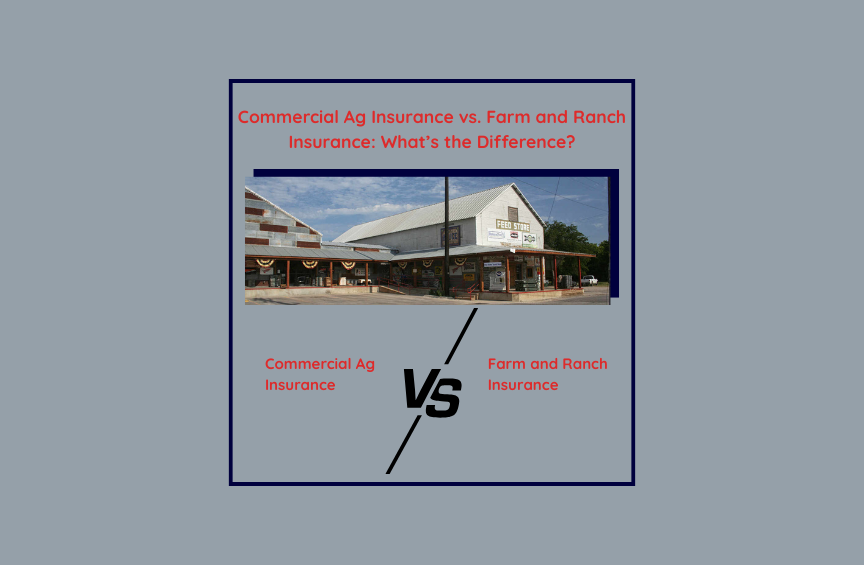
When it comes to placing agricultural risks, understanding the difference between commercial agribusiness insurance and a traditional farm and ranch policy is critical. While both serve the agricultural sector, they are designed for very different types of operations.
For insurance agents, knowing when to move from a farm form to a commercial agribusiness policy can make the difference between a clean placement and a coverage gap.
What is commercial agribusiness insurance?
Commercial agribusiness insurance is designed for larger, business-oriented agricultural operations that grow, manufacture, process, package, or distribute products. Underwriters often prefer operations that manage the entire production cycle—from cultivation through packing—especially for fruits, vegetables, and mushrooms.
At the same time, this coverage can also extend to commercial enterprises that support agriculture, such as feed stores and distributors that serve the wider ag industry.
Examples of eligible operations include:
- Fruit and vegetable growers
- Grain elevators and feed mills
- Feedlots
- Feed stores
- Food processors
- Commercial seed dealers
- Fertilizer and chemical distributors
- Large-scale produce packing operations
- Agricultural cooperatives
Unlike farm and ranch policies, commercial agribusiness policies are typically written on commercial property and general liability forms tailored with industry-specific endorsements.
Because exposures are more complex, underwriting commonly considers factors such as :
- Product liability and completed operations
- Equipment breakdown
- Pollution and chemical exposures
- Workers compensation and fleet risks
- Higher property values and specialized machinery
What is farm and ranch insurance?
Farm and ranch insurance falls somewhere between commercial agriculture insurance and a homeowners policy as it is designed to cover both personal and commercial risks.
These policies typically cover:
- Dwellings and farm structures
- Barns and outbuildings
- Scheduled farm equipment
- Farm liability
- Personal property
- Limited on-farm direct sales
Farm and ranch forms are ideal for family farms and small-to-mid-sized operations.
If an operation begins processing, manufacturing, distributing, or significantly expanding commercial sales, the exposure often exceeds what a farm form is built to handle.
When should an agent consider commercial agribusiness insurance?
An operation may need commercial agribusiness insurance instead of a farm and ranch policy if:
- Revenue is driven by processing or resale, not just production
- Products are packaged, labeled, or distributed commercially
- There is significant product liability exposure
- The operation spans multiple locations
- The business resembles a commercial enterprise more than a traditional farm
The larger and more diversified an operation becomes, the more likely a commercial agribusiness policy is appropriate.
Key coverage differences
Here’s a practical comparison insurance agents can use when evaluating placement:
Coverage Factor |
Farm & Ranch Policy |
Commercial Agribusiness Policy |
| Primary Focus | Crop & livestock production* | Commercial agricultural operations |
| Property Coverage | Barns, dwellings, scheduled equipment | Commercial buildings, processing equipment, inventory |
| Liability Scope | Premises & farm liability | Product liability, completed operations, commercial GL |
| Processing/Manufacturing | Very limited | Designed to cover it |
| Distribution Exposure | Minimal | Common and expected |
| Pollution/Chemical Exposure | Limited | Often specialized endorsements required |
| Equipment Breakdown | May be limited | Frequently essential |
| Business Complexity | Low to moderate | Moderate to high |
Here is a cheat sheet based on different types of operations:
Commercial Ag Policy |
Farm & Ranch Policy |
| Feedlots / feed stores | Hobby farms |
| Grain, feed, seed, and fertilizer operations | Vineyards |
| Commercial seed dealers | Hay operations |
| Large-scale produce packing operations | Equine operations |
| Agricultural cooperatives | Beekeepers |
| Farm supply stores | Barndominiums |
| Packing, storage, and processing operations | Livestock operations |
Why proper classification matters
Placing a commercial agricultural risk on the wrong form can create serious coverage gaps. For example:
- Product liability exclusions under farm policies
- Insufficient limits for processing equipment
- No coverage for off-premises distribution exposures
- Inadequate protection for commercial auto fleets
That’s why understanding agribusiness insurance is essential for independent insurance agents.
Stroud’s approach to agribusiness insurance
Farm and ranch and commercial agribusiness policies both play important roles in protecting agricultural operations — but they are not interchangeable.
As agricultural operations grow and diversify, coverage decisions become more complex. What worked under a traditional farm and ranch policy may no longer provide adequate protection.
At Stroud, our goal is simple: match the right coverage structure to the real-world exposure.
We help insurance agents navigate the transition from farm and ranch placements to properly structured commercial insurance solutions. We’ll help you determine the right form, the right structure, and the right carrier.
If you’re evaluating an agricultural risk and aren’t sure which direction to go, let’s talk.