
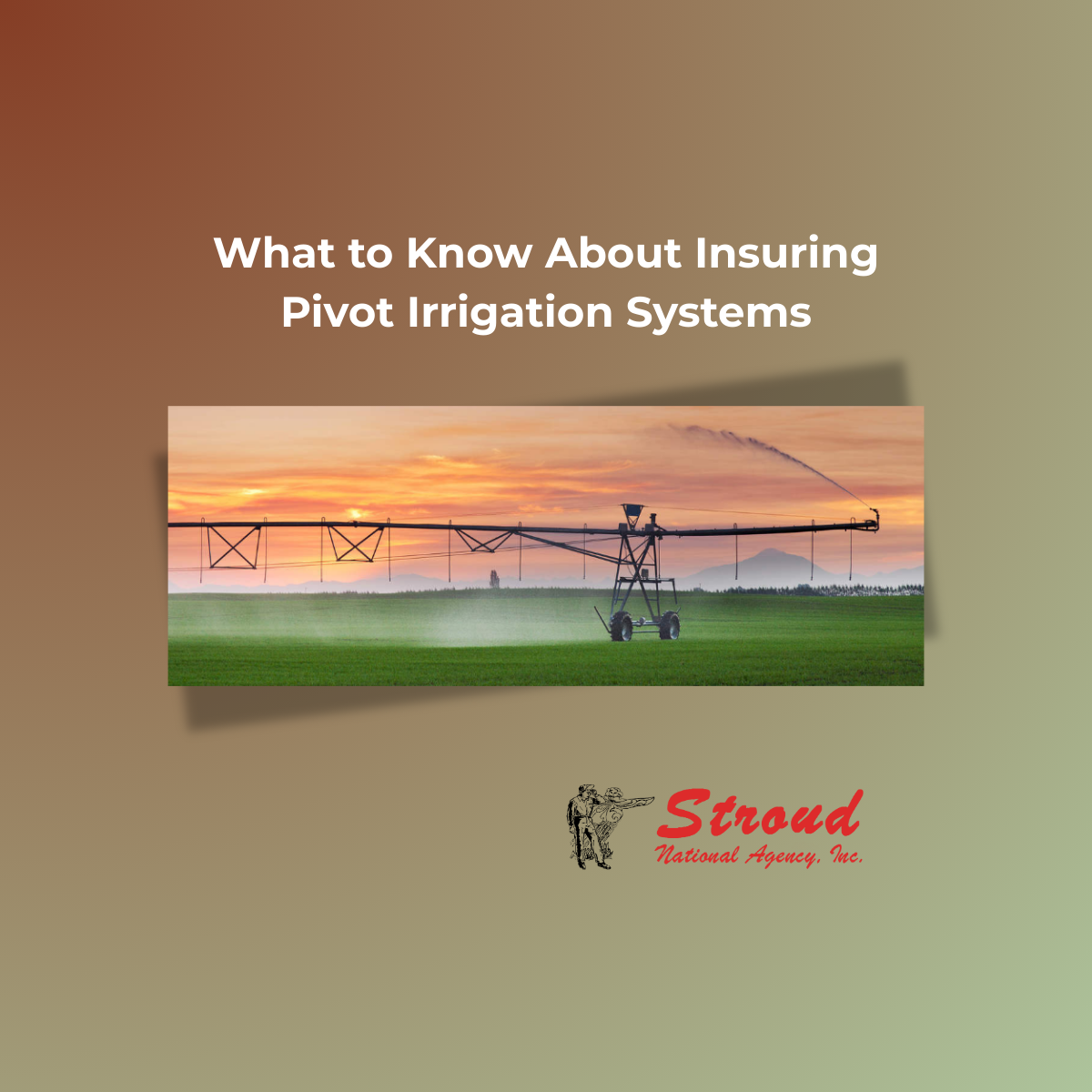
For many producers, a center pivot irrigation system represents one of the most valuable and relied-upon assets on the farm. It’s also one of the risks most exposed to wind, lightning, mechanical breakdown, and theft.
That’s why understanding how to properly insure a pivot irrigation system isn’t just about coverage; it’s about ensuring that when something goes wrong, recovery is clear, fast, and fair.
Irrigation Insurance Basics
Pivot irrigation systems are often insured under a standalone inland marine policy, not as part of farm property. These insurance policies recognize pivots as mechanical equipment rather than stationary structures, which means coverage can include specific perils such as collision, mechanical damage, and theft.
When submitting for coverage, clarity matters. Underwriters expect specific details about the pivot system like:
- Manufacturer, model, and year
- Number of towers and total linear footage
- Description of spans, panels, gearboxes, end guns, pumps and serial numbers
- Photos and site maps of each unit
- Location and ancillary equipment
Having this documentation up front avoids delays and helps ensure accurate valuation.

Pivot System Valuation and Coverage
One of the most common oversights in pivot insurance is valuation. A single lump sum for “the pivot” often doesn’t reflect real replacement costs. This is especially true due to the variations in:
- cost of pivot and pivot parts
- age
- upgrades
- span length
Listing values per tower or per system gives underwriters a clearer picture and ensures more accurate coverage.
It’s a good idea for agents to have regular discussions with local pivot irrigation vendors about current costs and the availability of replacement parts in order to keep valuations accurate.
It’s also important to clarify what’s included in the coverage.
Pumps, transformers, and underground lines aren’t always automatically part of the pivot form, they may need separate policy schedules to avoid gaps.
Serial Numbers Matter
When agents send in serial numbers for each pivot irrigation system, it creates a clear record of exactly what equipment is insured. In the event of a loss, this documentation prevents confusion about which system or components were affected, making claim resolution much smoother and more transparent.
Older Systems May Require More
For older or outdated pivot systems, underwriters may request additional verification, such as a letter of good standing from the maintenance vendor.
This confirms that the equipment is in reliable operating condition and that replacement parts are still available. While it’s an extra step, it ultimately helps keep coverage valid and ensures that parts can be purchased if there is a loss.
It’s also helpful to provide:
- A summary of pivot-specific losses by date that notes the cause (wind, lightning, collapse, theft, mechanical) and paid amount.
- A list of specific upgrades and parts to ensure that the system is in good running condition, and there are parts readily available if needed.
Risk Control and Maintenance
Regular inspections and maintenance logs do more than keep your equipment running, they can also improve your underwriting terms.
Demonstrating consistent upkeep shows insurers that you’re managing risk proactively, which can mean better coverage conditions and fewer disputes after a claim.
The Bottom Line on Pivot Irrigation Systems
Insuring a pivot irrigation system isn’t complicated when you approach it with precision and transparency. Complete documentation, accurate valuations, and proactive maintenance not only make underwriting smoother, but also ensure that coverage works as intended when you need it most.
At Stroud, we work closely with independent insurance agents in 18 states to make sure every pivot policy is built on clarity and confidence, from quote to policy. We partner with both Chubb and Aegis Agribusiness to craft the best pivot irrigation policy for your client’s needs.
Please contact us today if we can answer questions on irrigation insurance. We’re happy to help!