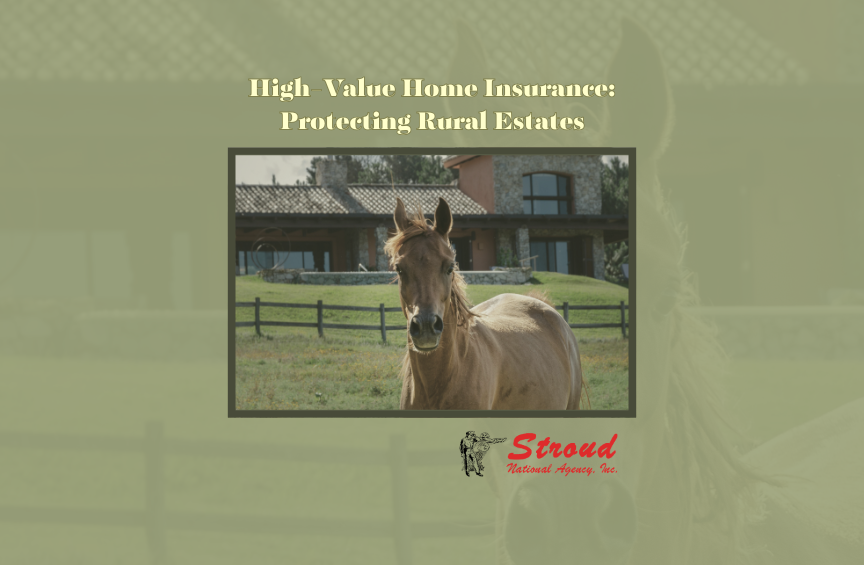
Anyone who has watched an episode of Yellowstone knows that living on a working ranch doesn’t necessarily mean living in a small country home.
It’s not unusual to find substantial custom homes sitting on hundreds or even thousands of acres, surrounded by barns, shops, guest houses, livestock, equipment, and other improvements.
Whether the rural estate is a working ranch or a family’s country retreat, insuring these properties can be considerably more complicated than writing a standard homeowners policy with a large Coverage A limit.
Start by Understanding How the Property Is Used
Before deciding how to insure a high-value rural estate (dwellings over $1,000,000), it’s important to understand what’s actually happening on the property.
Two homes with identical replacement costs could require very different insurance programs depending on how the land is used.
Start by asking a few basic questions:
- Is the home occupied year-round, or is it a seasonal or weekend residence?
- Is the property a working farm or ranch?
- Are horses, cattle, chickens, or other livestock kept for pleasure or for income?
- Are there ranch hands, seasonal workers, or live-in caretakers?
- Is acreage leased for hunting?
- Are guided hunts, private events, weddings, or agritourism activities taking place on the property?
- Is there any other commercial activity generating income?
These questions help determine whether you’re looking at a high-value homeowners risk or a farm and ranch account.
Getting that classification right before submitting the account can save everyone time and help prevent coverage surprises later.
A High-Value Estate is More Than the Dwelling
One of the biggest mistakes agents can make is focusing so heavily on the residence that everything surrounding it becomes an afterthought.
Rural estates often include significant additional property:
- Barns and horse facilities
- Shops and equipment buildings
- Guest houses
- Hunting cabins
- Well houses
- Irrigation systems
- Fencing and corrals
- Garages
- Pools and recreational structures
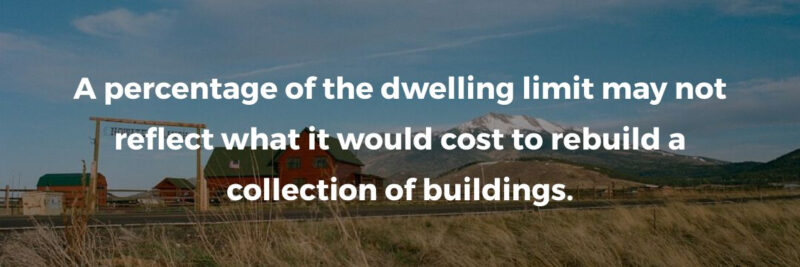
These structures need to be individually evaluated and properly valued. Simply assigning a percentage of the dwelling limit to “other structures” may not accurately reflect what it would cost to rebuild a collection of custom rural buildings.
The same is true of livestock and equipment. Farm forms may provide scheduled or limited coverage, but that doesn’t necessarily mean everything on the property is insured at its current replacement or market value.
Personal Property
High-value rural estates can contain significant personal property that isn’t adequately represented by a blanket personal property limit. A benefit to insuring high-value homes with Stroud is that we write them with extended replacement cost at 125%, though high-value items such as:
- Fine art
- Collections
- Firearms
- Saddles and tack
- Jewelry
- Antiques
may need to be specifically scheduled or otherwise addressed.
Don’t Let the Umbrella Fall Through the Cracks
High-net-worth clients often have personal umbrella coverage, but agents should make sure the umbrella and farm liability policies actually work together.
For a high-value rural estate, coordinating the home, farm liability, auto, equipment, and umbrella coverage is just as important as choosing the right individual limits.
Rural Challenges for High-Value Homes
A rural location can come with a significant risk when it comes to emergency response. We’ll use hazards Texas ranches face as an example of things agents should consider.
Weather
Rural estates face many of the same weather exposures as other properties, but the consequences can be amplified by the size and location of the estate.
Wind and hail are obvious concerns, and percentage-based deductibles can also create a surprisingly large out-of-pocket expense on a high-value home.
For example, a 2% deductible on a $2.5 million dwelling is $50,000. At $5 million, that same percentage becomes $100,000. Those numbers are worth discussing with the client before a storm, not after one.
Water
Flood is another important consideration. A property doesn’t have to sit inside a mapped floodplain to experience flooding, particularly when it is located near creeks, low-water crossings, or other drainage areas.
And then there are the rural systems that a suburban homeowner may never have to think about, but are essential to keeping a rural estate operating:
- wells
- septic systems
- generators
- HVAC equipment
- irrigation
Agents should review equipment breakdown provisions carefully rather than assuming that a standard property policy will respond to every mechanical failure.
Fire
Properties far from a responding fire department may have different fireline scores or protection classifications than homes in more densely populated areas. Longer response times and limited access to municipal water can make a total loss more likely and can also affect underwriting and premium.
Verify the:
- actual distance to the responding fire station
- available water sources
- on-site fire protection resources such as ponds, tanks
- other suppression equipment
Those details can help create a stronger submission.
Don’t Overlook the Liability Exposure
The liability side of a rural estate can look very different from the liability exposure of a suburban high-value home as they could involve:
- Horses and livestock
- Hunting leases
- ATVs and UTVs
- Ponds, tanks, or other bodies of water
- Agritourism activities
- Private events
- Guest lodging
- Open-range livestock exposure
In Texas, cattle getting onto a roadway and causing an accident is a real exposure. Likewise, hunting and agritourism activities can introduce liability considerations that aren’t typically present on a standard homeowners account.
Texas law also provides certain liability protections for qualifying agritourism activities, but those protections have specific requirements. Agents should not assume that simply calling an activity “agritourism” automatically provides protection.
Employees Can Create Coverage Gaps
Large rural estates may employ people to maintain the property, care for livestock, manage the grounds, or oversee day-to-day operations.
Workers compensation and employers’ liability considerations may require specific attention depending on the operation and applicable requirements.
Seasonal Homes Need Special Attention
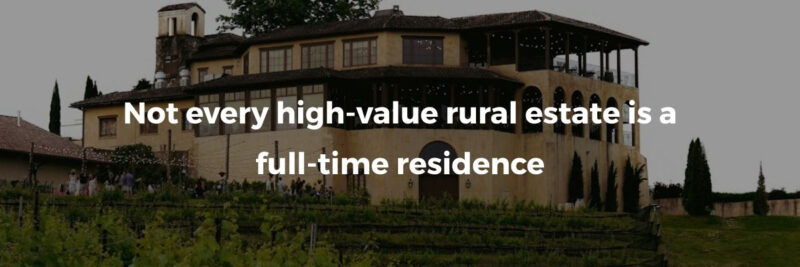
Some are weekend retreats. Others may be occupied only during hunting season or certain times of the year. That distinction matters.
Seasonal or intermittently occupied homes may have different requirements relating to security, monitoring, water shutoffs, freeze protection, inspections, and other risk-management measures.
What Makes a Strong High-Value Home Insurance Submission?
The best submissions give the underwriter a complete picture of the property. For high-value rural estate, that can include:
- A rural-calibrated replacement cost estimate or appraisal
- Photos and individual values for every major structure
- A complete description of acreage and land use
- Livestock counts and types
- Equipment schedules and values
- Details about employees and caretakers
- Hunting leases, agritourism, events, or other commercial activities
- Verified protection class and fire response information
- Roof, electrical, plumbing, HVAC, well, and septic information
- Loss history across applicable home, farm, auto, and umbrella policies
- Security and monitoring details for seasonal properties
- Information about wells, generators, irrigation, and other critical systems
The more complete the submission, the easier it is for an underwriter to understand what makes the property unique and determine how it should be insured.
Partner With Stroud on High-Value Rural Estates
Insuring a high-value home on a farm or ranch is fundamentally different from insuring a high-value home in the suburbs, which is why working with an experienced MGA can make a difference.
Stroud works with independent insurance agents to help navigate complex rural risks, build stronger submissions, and identify coverage solutions that meet the needs of each property.
If you’re working on a high-value home insurance opportunity in a rural setting, don’t try to fit a complex estate into a standard box. Reach out to Stroud, we’re here to help.